Desert Horseback Tour vs Jeep Tour for Your Day
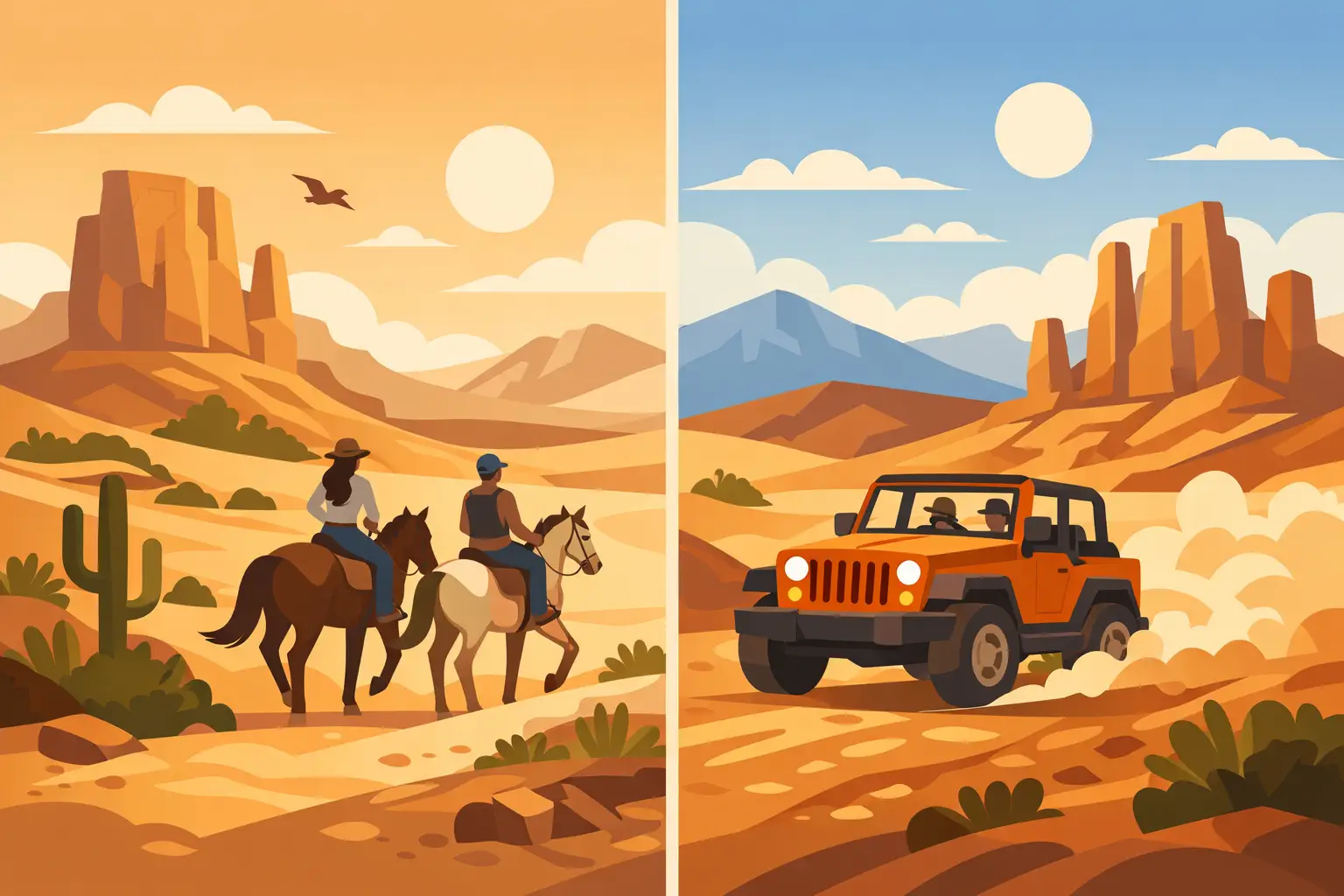
A desert horseback tour vs jeep tour is not simply a choice between two ways of getting outside. It is a choice about the pace of your day, how closely you want to experience the landscape, and what kind of memory you want to take home. One puts you in the open air beside a horse with time to notice the details. The other covers more ground with the ease of a vehicle. Both can be memorable. The better fit depends on your group, comfort level, and idea of adventure.
For visitors and locals around Greater Phoenix, the desert can look very different when you experience it from the saddle instead of behind a windshield. The sounds are quieter, the scenery arrives at a more natural pace, and a knowledgeable guide can help turn a beautiful view into a meaningful story about the land.
Desert Horseback Tour vs Jeep Tour: The Main Difference
The biggest difference is not speed. It is connection.
A jeep tour is built around coverage. You may travel farther over a shorter time, see broad stretches of desert terrain, and enjoy an easy option for guests who prefer to stay seated in a vehicle. It can be a practical choice for a mixed group with limited mobility, very young children, or people who are not comfortable around horses.
A horseback ride is built around presence. You are outside rather than enclosed, moving with a well-cared-for horse and taking in the landscape without the steady mechanical sound of an engine. There is room to breathe, talk with your guide, and enjoy the simple rhythm of being on the land. For many first-time riders, that slower pace is exactly what makes the experience feel special rather than intimidating.
Neither option is automatically better. A family trying to fit several sightseeing stops into one afternoon may appreciate the efficiency of a jeep. A couple planning a meaningful desert outing may find that a guided ride gives them more space to be together and take in the moment.
Choose a Horseback Tour for a More Personal Desert Experience
Horseback riding asks you to participate. You will meet your horse, listen to your wrangler’s safety guidance, and learn how to sit comfortably and communicate clearly. That small amount of involvement changes the experience. You are not just looking at the desert. You are moving through it with a living partner.
At KOLI Equestrian Center, rides are designed to feel welcoming for beginners while still being rewarding for guests with more riding experience. The focus is not on rushing people through a rigid, single-file routine. Riders are given thoughtful spacing when conditions allow, making it easier for families, friends, and couples to enjoy conversation and the scenery while staying guided and safe.
A horseback tour is especially well suited to guests who want an experience that feels unhurried and shareable. It works beautifully for date days, visiting relatives, birthdays, friend groups, and anyone who wants photos that show more than a scenic overlook. It also gives children and first-time riders a chance to build confidence around horses in a professionally managed setting.
The right operator matters here. A quality horseback experience starts with horses that are matched appropriately to riders, clear instructions before departure, and wranglers who pay attention throughout the ride. Guests should feel cared for, not hurried. Ask about age requirements, weight guidelines, what to wear, and whether the ride is appropriate for a first-time rider before booking.
The Value of a Guide Who Knows the Land
A vehicle can take you to a viewpoint. A knowledgeable wrangler can help you understand what you are seeing along the way.
On the Gila River Indian reservation, a guided ride can offer a respectful introduction to the region’s landscape and local heritage. This is not about turning culture into a backdrop. It is about listening, learning, and recognizing that desert land holds stories that deserve care and context. The best guides know when to share, when to let the quiet speak for itself, and how to make visitors feel welcome.
That sense of place is one reason horseback riding often stays with guests long after a vacation ends. You may remember the warmth of the afternoon, your horse’s ears ahead of you, a laugh from someone in your group, and a guide’s story that gave the view a deeper meaning.
When a Jeep Tour May Be the Better Choice
A jeep tour can be the more comfortable answer in certain situations. If someone in your party has mobility limitations, feels uneasy around animals, or wants protection from wind and dust, a vehicle may remove barriers that would make a horseback outing less enjoyable. It may also make sense during a tightly scheduled trip when covering more ground is the priority.
Weather is another practical factor. Desert conditions can change quickly. On a cooler day, open-air riding can feel wonderful. On a particularly hot afternoon, some guests may prefer a vehicle with shade or other comforts. Ask the tour provider what conditions to expect and whether departure times are adjusted seasonally.
Jeep tours are often a good fit for guests who enjoy off-road travel and want a broad overview of the region. They can provide dramatic views and a strong sense of adventure without requiring any horse-related instruction. For a multigenerational group where comfort needs vary widely, that simplicity can be valuable.
Still, convenience comes with a trade-off. A vehicle experience can feel more removed from the terrain. You may cover more miles, but have less time to notice the small things: the changing texture of the ground, the bird calls, the quiet between conversations, and the way late-day light shifts across the desert.
Think About Your Group Before You Book
The best choice often becomes clear when you consider who is coming with you. For any family, ask whether the children are old enough and interested in spending time around horses. For a romantic couple, decide whether you want an energetic sightseeing activity or a slower shared experience. For corporate group or celebration, consider whether your guests will value interaction, conversation, and a memorable setting over distance covered.
Also be honest about your comfort level. First-time riders do not need to arrive with special skills, but they should be open to following instructions and spending time in the saddle. Comfortable closed-toe shoes, weather-appropriate clothing, sunscreen, and water help make the day more enjoyable. A reputable stable will explain what to expect well before you arrive.
If your group includes a mix of preferences, do not assume the easiest choice is always the best one. The person who says they have never ridden before may end up loving the calm, guided introduction. The guest who is unsure about a horseback ride may feel more confident after hearing how horses are selected and how closely wranglers support beginners.
What Makes a Desert Ride Feel Worth It
A good desert experience should feel safe, well organized, and genuinely welcoming. But the outings people talk about afterward also have personality. They give guests room to connect with each other, learn something real, and feel like they did more than check off a tourist activity.
That is where horseback riding has a distinct advantage. A horse naturally slows the day down in the best way. You cannot rush every moment, and that is part of the gift. You have time to look around, listen to your guide, and enjoy the fact that your group is sharing the same landscape from a perspective that feels both timeless and immediate.
Choose the jeep when comfort, distance, or mobility needs lead the decision. Choose the saddle when you want the desert to feel closer, quieter, and more personal. The right tour is the one that lets your group leave with dusty boots, happy stories, and a deeper appreciation for the land beneath you.