
How Horseback Tours Work for First-Timers
You can usually spot first-time riders before the ride even starts – they are equal parts excited and unsure what happens next. That is completely normal. If you have ever wondered how horseback tours work, the short answer is that a good tour is designed to make the experience feel easy, safe, and memorable from the moment you book to the moment you step back on the ground.
The best horseback tours are not just about sitting on a horse and following a trail. They are carefully guided outdoor experiences built around hospitality, safety, and a real connection to the land. That matters whether you are planning a family outing, a date, a vacation activity, or a group event with people who may have very different comfort levels around horses.
How horseback tours work before you arrive
Most tours begin long before anyone mounts up. You choose a ride length, pick a time, and complete the basic booking details. Depending on the operator, that may include age requirements, weight guidelines, what to wear, and a waiver. Those details are not there to make the experience feel formal. They help the team prepare the right horses, staffing, and pacing for the group.
This part often answers one of the biggest concerns beginners have, which is whether they need experience. In most guided trail experiences, the answer is no. A well-run operation is built to welcome first-time riders, and the ride structure reflects that. The staff expects questions, and they know that many guests are trying this for the first time.
Arrival time matters more than people think. Showing up a little early gives everyone time to check in, use the restroom, ask questions, and settle nerves. If you rush in at the last second, the start can feel more stressful than it needs to be.
What happens when you check in
Once you arrive, the flow is usually simple. You check in, confirm your reservation, and meet the team. From there, wranglers or guides start getting a sense of the group. They are paying attention to things like confidence level, age, group dynamics, and whether anyone seems especially nervous.
That first interaction is important because horseback tours are not one-size-fits-all. A couple celebrating an anniversary may want a peaceful scenic ride. A family with children may need more reassurance and a steady pace. A group of friends may be looking for something social and relaxed. The best guides read the room early so they can shape the experience around the people actually showing up.
You will also get practical instructions. That usually includes where to stand around horses, how to approach them, and what not to do. Horses are calm, trained animals, but they are still living animals. Respecting their space is part of what keeps the experience smooth for everyone.
The safety talk is part of the experience
Some guests hear “safety briefing” and picture a stiff lecture. In reality, a good safety talk makes the ride feel more comfortable. It covers how to mount, how to sit, how to hold the reins, and how to listen for guidance on the trail. You may also hear basic instructions for spacing, stopping, and turning.
This is where many people realize horseback riding is less complicated than they expected. You do not need to know everything before you arrive. The job of the guide is to teach you the essentials in a clear, friendly way.
There is also a trust factor here. If the team explains things confidently and answers questions without brushing anyone off, guests relax. That is a big part of what separates a polished tour from a generic attraction.
How horses are matched to riders
One of the most common questions behind how horseback tours work is whether guests get to pick their horse. Sometimes people have a preference based on size, color, or personality, but in guided settings, horse assignment is usually done by the staff. That is a good thing.
Experienced wranglers match horses based on practical factors, not just appearance. They consider rider size, comfort level, experience, and the overall group. A calm, steady horse may be ideal for a first-time rider or child, while a more responsive horse may suit someone with more riding familiarity. The goal is not to make the ride exciting in a risky way. The goal is to create a comfortable partnership so the guest can enjoy the experience.
This is also why quality operators put so much emphasis on well-cared-for horses. A tour is only as good as the horses carrying the group. When horses are handled with consistency and care, guests feel the difference.
What the ride itself usually feels like
Once everyone is mounted and adjusted, the group heads out with the guide leading. For first-time riders, the biggest surprise is often how peaceful the ride feels after the first few minutes. The horse does not expect you to be an expert. Your guide is there to give direction, and the horse already understands the routine of the trail.
That does not mean every horseback tour feels exactly the same. Some are more structured, while others create a little more room for rider spacing and conversation. Some focus mostly on scenery. Others are shaped by storytelling, local history, or cultural interpretation that makes the landscape feel more meaningful.
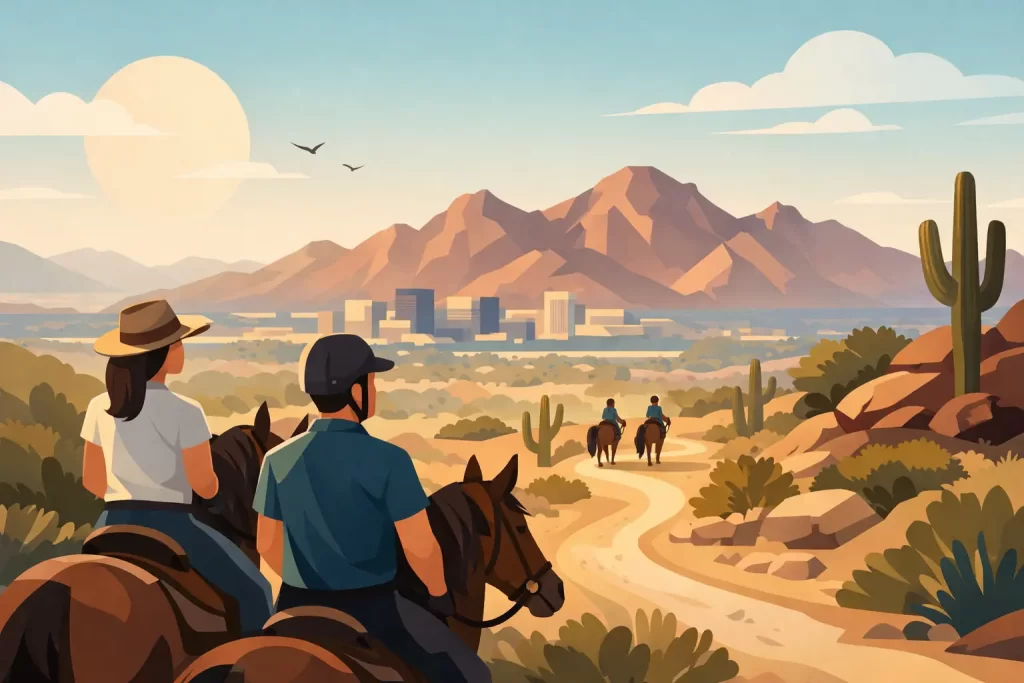
That difference matters. A horseback tour can be just transportation through pretty scenery, or it can feel like an actual experience of place. On desert rides especially, the land has its own rhythm. Guests notice the quiet, the open views, the wildlife, the changing light, and the feeling of slowing down enough to really take it in.
How horseback tours work on the trail
Trail etiquette helps the group move comfortably. You will usually be asked to keep a reasonable distance between horses, stay attentive, and follow the guide’s instructions. That does not mean you need to be silent or stiff. In fact, many guests enjoy the social side of riding. They talk with the people they came with, ask questions, and settle into the pace.
The guide is doing more than leading the way. They are monitoring the group, checking horse behavior, adjusting spacing, and making sure everyone remains comfortable. If someone feels nervous, a good guide notices early and offers simple coaching before that nervousness grows.
This is one reason guided tours work well for beginners and mixed groups. You are not expected to figure everything out on your own. The structure is there so you can enjoy the ride without feeling lost.
What to wear and bring
The practical side of horseback tours is simple, but it can make a big difference. Closed-toe shoes are usually the right choice. Comfortable clothes are better than anything restrictive, and desert rides call for sun-smart planning. That can mean sunscreen, sunglasses, and a layer if temperatures shift early or late in the day.
The less you bring in your hands, the better. You want to stay balanced and relaxed, not juggle extra items. If you are unsure about phones, bags, or water, ask ahead so you know what the operator allows and what is easiest on the trail.
It is also worth dressing for the experience you want, not just the photo. Western style looks great, but comfort matters more when you are actually in the saddle.
Who horseback tours are best for
Horseback tours work well for a wide range of guests because they combine gentle adventure with strong guidance. They are a natural fit for couples, families, friend groups, visitors, and even work teams looking for something more memorable than a standard outing.
That said, not every tour is right for every person. Some children may be ready for a riding experience, while others may do better with a wagon-based activity or a shorter introduction around horses. Some adults want a quiet scenic ride, while others are mostly drawn to the storytelling and cultural side of the experience. The right fit depends on the guest, the group, and the style of the operator.
In Arizona, that style can make all the difference. A ride through the desert can be beautiful on its own, but when knowledgeable wranglers also share the land’s character, local history, and the role horses play in the experience, the outing feels much richer. That is part of why KOLI Equestrian Center approaches guided rides as more than a standard trail activity.
What makes a horseback tour feel worth booking
People often assume the value is just the time on the horse. In reality, what makes a horseback tour worth booking is the full experience around it. That includes the welcome you get when you arrive, the professionalism of the team, the condition of the horses, the pacing of the ride, and whether the outing feels personal rather than mechanical.
There is a trade-off here. Highly scripted tours can feel orderly, but they may also feel impersonal. Looser experiences can feel more natural and social, but only if the guides are skilled enough to keep everyone safe and comfortable. The best operators find that balance.
If you are choosing a ride for your group, look for signs that the team cares about more than just moving people through a schedule. Good tours leave room for real hospitality. They welcome questions, respect beginners, and make the landscape part of the experience instead of just the backdrop.
A horseback tour should leave you with more than a few photos. It should give you that rare feeling of having stepped into the land instead of just passing by it. When a ride is guided well, that starts before the saddle and stays with you after the trail ends.