

Riding Lessons Versus Trail Rides Compared
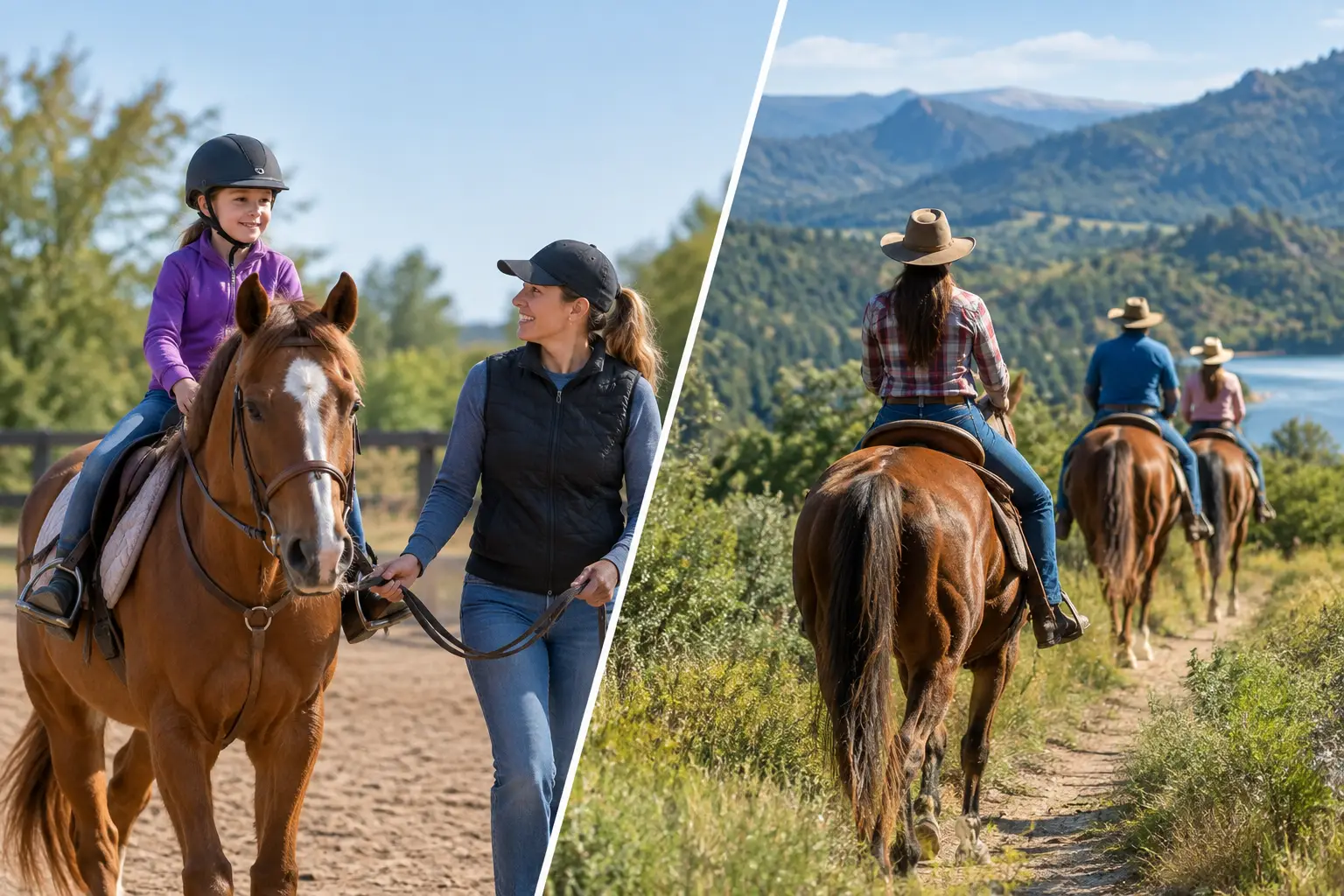
A first-time rider often asks one question before booking: should I take lessons first, or can I enjoy a trail ride right away? The answer to riding lessons versus trail rides is not about which option is better. It is about what you want from your time in the saddle.
One experience is built around learning skills over time. The other is built around seeing the desert, connecting with a horse, and sharing a memorable outing with the people beside you. Both can be rewarding, especially when horses are well cared for and guides put safety first. Knowing the difference helps you choose an experience that feels exciting rather than intimidating.
Riding Lessons Versus Trail Rides: The Core Difference
Riding lessons are structured sessions designed to build horsemanship. You work on the fundamentals repeatedly, often in a controlled setting, with an instructor watching how you sit, use your hands, communicate with the horse, and respond to direction. Each lesson builds on the last. The goal is progress.
A guided trail ride is a hosted outdoor experience. You are paired with a suitable horse, introduced to the basics needed for the ride, and led by knowledgeable wranglers through scenic country. The goal is not to turn every guest into an equestrian in one afternoon. It is to help people safely enjoy the horse, the landscape, and the moment.
That distinction matters. A trail ride can introduce you to horseback riding, but it is not a substitute for a consistent lesson program if your goal is independent skill development. Likewise, a lesson may be exactly right for someone focused on technique, but it does not always offer the wide-open scenery, conversation, and vacation-ready sense of adventure that draw people to a guided desert ride.
Choose Riding Lessons When Skill Is the Goal
Lessons make the most sense when you want to develop a long-term relationship with riding. Perhaps you hope to become more confident handling horses, want regular coaching, or have a specific discipline you would like to pursue. In that case, repetition is valuable. Your instructor can spot small habits early and give you time to practice changes from one session to the next.
A lesson environment is also helpful for riders who want detailed feedback. You may spend time learning how a horse responds to your position, how to guide clearly, how to care for equipment, and how to build confidence through familiar exercises. Because the setting is more controlled, there is room to pause, ask questions, and try again.
For children who are deeply interested in horses, ongoing lessons can be especially meaningful. They teach patience, responsibility, and consistency alongside riding skills. Families should keep in mind, however, that a child who simply wants a special birthday memory or a first horseback experience may not need a full lesson commitment to have a wonderful time.
Lessons do require more than a single reservation. Progress comes from showing up consistently, being open to coaching, and accepting that some sessions will feel more challenging than others. That is part of the reward for riders who enjoy learning a craft.
Choose a Trail Ride When the Experience Is the Goal
A trail ride is often the better fit when you are visiting Arizona, planning a date, celebrating with friends, bringing family together, or looking for an outdoor activity that feels different from the usual afternoon plans. You do not need to arrive with a long list of riding goals. You only need an interest in meeting a horse and spending time outside.
At KOLI Equestrian Center, guided rides are designed to feel personal rather than like a rigid line of strangers moving through the scenery. Wranglers help guests get comfortable, share knowledge about the horses and surrounding land, and create space for connection along the way. For many guests, that balance of guidance and freedom is what makes the experience stick with them.
The setting matters, too. A desert trail ride offers more than time on horseback. It is a chance to notice the colors of the landscape, breathe in open air, and hear stories connected to the Gila River Indian reservation and the region’s heritage. A good guide adds context without taking attention away from the ride itself.
Trail rides are especially appealing to beginners because the experience is managed with their comfort in mind. Trained horses, clear instructions, appropriate group pacing, and attentive wranglers give guests a strong foundation. You will learn enough to participate safely, but the day remains centered on enjoyment rather than performance.
What First-Time Riders Should Expect
First-time riders do not need to be experts to enjoy a guided trail ride. They do need to listen closely during the safety briefing, follow the wrangler’s instructions, and be honest about their comfort level. Share concerns before mounting, whether that is a fear of heights, uncertainty around animals, or a past experience that did not go well. A professional team would rather answer questions early than have a guest quietly worry through the ride.
Wear comfortable clothing that allows you to move easily, along with closed-toe shoes. Follow the outfitter’s guidance on age, weight, and health requirements. These policies are not there to make booking difficult. They help match guests and horses appropriately and protect the welfare of everyone involved.
It also helps to set the right expectation: horses are living partners, not amusement rides. They have personalities, needs, and natural responses to the world around them. Respecting the horse, staying present, and trusting your guide can make a first ride feel far more comfortable.
Your Group Can Help Make the Decision
The best choice may depend less on your personal experience level and more on who is coming with you. A group of coworkers, visiting relatives, or friends celebrating a milestone usually benefits from a guided trail ride. Everyone can take part together, enjoy the scenery, and leave with a shared story.
Couples often choose trail rides for the same reason. The experience creates easy conversation before and after the ride, while the quiet of the landscape offers a break from busy schedules. It can feel adventurous without requiring months of preparation.
If one person in your group is an experienced rider and the others are new, a trail ride can still work well when the operator matches horses thoughtfully and explains expectations clearly. The experienced guest may not be seeking advanced coaching that day, but they can still appreciate a quality horse, a beautiful route, and a knowledgeable guide.
On the other hand, if everyone in the group wants individualized coaching and has the time to return regularly, lessons are likely the stronger choice. The key is choosing an activity that matches the purpose of the day, not forcing a lesson into a celebration or expecting a scenic trail ride to serve as a full training program.
Safety Is Not the Same as Experience Level
Some people assume trail rides are only for complete beginners, while lessons are only for serious riders. In practice, both can serve a range of guests when they are led professionally. Safety comes from sound horses, experienced staff, honest screening, good preparation, and clear communication. It does not come from pretending every rider needs the same thing.
A quality trail operation will ask about your experience, explain what the ride involves, and make decisions based on conditions and guest needs. A quality lesson program will do the same, while also giving more detailed instruction and feedback. In either setting, the best experience is one where you feel respected, supported, and never pressured to prove anything.
Make the Choice That Fits This Season
Choose lessons if you are excited by the idea of building skills one session at a time. Choose a trail ride if you want to step into the Arizona landscape, meet a remarkable horse, and make a memory with the people you brought along. There is no wrong place to begin.
And if a guided ride leaves you wanting to learn more, that is a wonderful sign. Let the first experience be exactly what it should be: a safe, welcoming introduction to the horse, the land, and the kind of adventure that stays with you long after the dust settles.