
What Happens on a Guided Trail Ride?
You can usually spot first-time riders before they even step into the stirrup. They are excited, a little unsure, and often wondering the same thing: what happens on a guided trail ride, exactly? That question matters, because a well-run ride should feel welcoming from the moment you arrive, not confusing or intimidating.
A guided trail ride is not just a horse, a saddle, and a path through the desert. It is a hosted outdoor experience built around safety, comfort, scenery, and connection. When the ride is done well, you are not left to figure things out on your own. You are met by experienced wranglers, introduced to your horse, given clear instruction, and guided through the landscape by people who know the land and how to help riders enjoy it.
What happens on a guided trail ride before you ride
Most guided rides begin well before anyone gets on horseback. You check in, confirm any paperwork, and have a chance to ask questions. This is often the point where nerves settle down, especially for beginners. A professional team will explain what the experience looks like, how long you will be riding, and what you need to know before heading out.
You are usually matched with a horse based on practical factors like rider experience, size, and comfort level. That pairing is more important than many people realize. A good match helps the ride feel relaxed and enjoyable, whether you have never ridden before or have spent time around horses in the past.
There is also a safety talk. This should be straightforward, not overwhelming. You will learn how to mount, how to sit, how to hold the reins, and how to follow your guide’s instructions on the trail. On a quality ride, the wrangler explains things in plain language and checks that everyone feels ready before the group moves out.
Meeting your horse and getting comfortable
For many guests, this is the most memorable part before the ride even begins. Horses have different personalities, and part of a guided experience is getting a brief moment to meet the one you will be riding. You may be shown how to approach, where to stand, and how to stay calm and steady while mounting.
If you are new, it is normal to feel a little awkward at first. Sitting on a horse feels different from anything else, and your height off the ground can make the first few moments feel bigger than expected. That usually passes quickly once the horse starts moving and you realize you do not need to do everything perfectly to enjoy the experience.
Experienced wranglers pay attention to these details. They can often tell who needs extra reassurance, who wants more instruction, and who is ready to relax and take in the view. That human side of a guided ride makes a real difference.
What the trail ride itself usually feels like
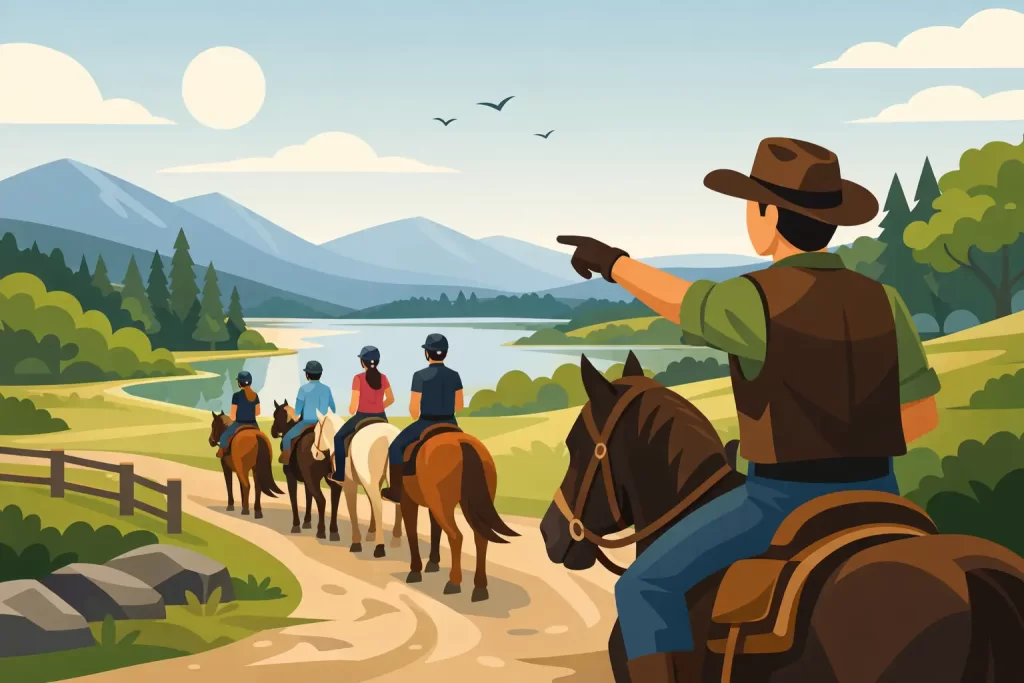
Once the group heads out, the pace is typically calm and manageable. This is especially true on rides designed for families, visitors, and beginners. The point is not speed. The point is to enjoy the setting, the rhythm of the horse, and the feeling of being out on the land in a way that is slower and more connected than you get from a car or a hiking trail.
That said, not every guided ride feels exactly the same. It depends on the terrain, the group, the guide, and the style of the operation. Some rides are very traditional and keep riders tightly lined up the whole time. Others create a little more space so guests can relax, talk with their group, and enjoy a more natural experience while still staying safely guided. That difference matters if you want the ride to feel personal rather than rigid.
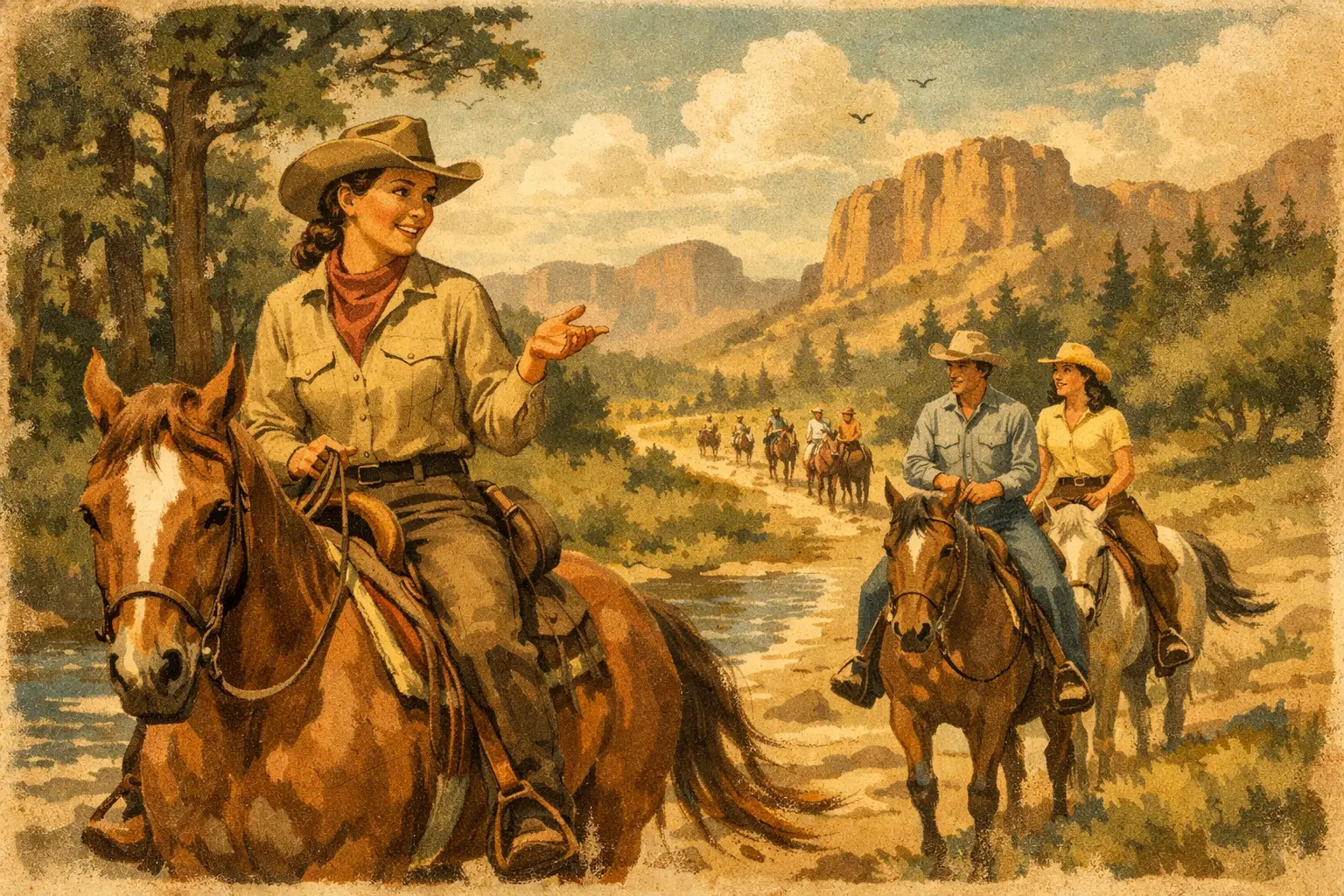
On desert trails, riders often notice the quiet first. You hear hoofbeats, wind, birds, and the occasional voice from your guide pointing out something you would have missed on your own. The landscape has its own pace, and horseback riding fits it well.
What your guide actually does on the trail
A guide is not just there to lead the first horse and call it a day. On a good trail ride, the guide is managing the experience from start to finish. That includes keeping the group organized, watching rider comfort, reading horse behavior, adjusting spacing, and sharing information that brings the setting to life.
This is where a guided ride becomes more than a basic outdoor activity. A knowledgeable wrangler can explain how to sit more comfortably, remind you how to use your reins, and help if your horse pauses, speeds up slightly, or wants to snack on trail-side plants. They also shape the mood of the ride. A warm, confident guide helps beginners relax and helps more experienced riders feel that they are in capable hands.
In places with rich local history and culture, the guide may also interpret the land in a deeper way. That can mean talking about the desert environment, local heritage, wildlife, or how people have lived with the landscape over time. For many guests, those stories are what make the ride stay with them.
What happens on a guided trail ride if you are nervous
Being nervous is common, and it does not mean horseback riding is not for you. Most people who feel uncertain at the start settle in once they understand that guided trail rides are built to be supportive. You are not expected to know horse terms, ride like an expert, or hide that you are new.
A professional operation plans for first-timers. The horses used for guided rides are typically chosen because they are steady and used to carrying guests with different experience levels. The instructions are simple, the route is guided, and the wranglers are there to help if you need anything.
The one thing that helps most is being honest. If you are nervous, say so. If you have ridden before but it has been years, say that too. The more your guide knows, the better they can support you.
What to wear and what to bring
Guests often overthink this part. You do not need a full Western wardrobe to enjoy a trail ride. You just need practical, comfortable clothing suited to the weather. Closed-toe shoes are usually the big one. Long pants are often more comfortable in the saddle, and sun protection matters in Arizona more than many visitors expect.
Bring water if the operator allows it, and listen to any pre-ride guidance about bags, phones, and hats. Some items are easy to manage on horseback, while others can become distracting. If you are unsure, ask before the ride starts instead of trying to sort it out once you are mounted.
The experience is different for every group
One of the best parts of a guided trail ride is that it can fit different occasions. A couple may want a quiet, scenic ride with room to take in the moment. A family may want something beginner-friendly and memorable for the kids. A group of friends may be looking for a shared adventure that feels more meaningful than another standard outing.
The ride itself stays grounded in the same basics, but the atmosphere can shift depending on who is there and how the guide reads the group. That is why hospitality matters so much. A great ride does not feel one-size-fits-all, even when the route is familiar.
At KOLI Equestrian Center, that experience is shaped not only by the horses and wranglers, but by a stronger connection to the land and the stories that belong to it. For many guests, that turns a fun activity into something more memorable.
What people are often surprised by
Many first-time riders expect the hardest part to be controlling the horse. Usually, the bigger surprise is how relaxing the ride feels once they stop trying to do too much. Guided trail riding is less about constant steering and more about staying balanced, listening to your guide, and enjoying the rhythm.
People are also often surprised by how much personality horses have. Some are curious, some are more businesslike, and some seem to know the trail better than anyone. That partnership between horse, rider, and guide is part of what makes the experience feel real instead of staged.
Another surprise is how quickly time passes. An hour on the trail often feels shorter than expected, especially when the scenery is open and the group is having a good time.
After the ride
When the ride ends, there is usually a short period to dismount, thank your horse, and talk about the experience. This is often when guests realize they were much more comfortable than they expected. It is also when people start planning the next ride, because once the unknown is gone, the whole experience feels more accessible.
If you have been wondering what happens on a guided trail ride, the real answer is simple. You arrive with questions, you are welcomed and prepared, and then you get to experience the land from a different point of view – one that is calm, grounded, and hard to forget. If you choose the right place, you do not just go for a ride. You come away feeling like you were genuinely taken care of.