
How to Mount a Horse Safely on Your First Ride
A calm mount starts before your boot reaches the stirrup. The horse should be standing quietly, your guide should know you are ready, and you should feel settled rather than rushed. Learning how to mount a horse safely is less about strength than it is about clear communication, good balance, and giving the horse a comfortable, predictable experience.
For first-time riders, the saddle can look much higher from the ground than expected. That is normal. A patient horse, an experienced wrangler, and a few simple habits make the process feel far more manageable. On a guided ride, always follow the mounting method your wrangler demonstrates, even if you have ridden somewhere else before.
Start With a Calm, Prepared Horse
Horses pay close attention to energy, movement, and pressure around them. If a rider approaches quickly, pulls on the saddle, or tries to climb aboard before the horse is settled, the horse may shift away. That does not mean the horse is misbehaving. It often means the moment needs more patience.
Stand on the horse’s left side unless your wrangler directs you otherwise. This is the customary mounting side at most riding facilities. Keep a respectful distance from the horse’s legs and avoid walking directly behind it. Speak softly if you need to get the horse’s attention, and let your guide position the horse before you begin.
Check Your Gear Before You Step Up
A properly fitted helmet, closed-toe footwear with a defined heel, and comfortable clothing all help you mount with more confidence. Loose scarves, long dangling accessories, or bulky bags can catch on tack and create an unnecessary distraction.
Your wrangler should check the saddle and girth before riders mount. If anything feels loose, pinches, or seems out of place, say so before getting on. Do not try to adjust straps or equipment yourself unless your guide asks you to. A well-cared-for horse and correctly fitted tack are part of the safety foundation, but clear communication is just as valuable.
Use a Mounting Block When One Is Available
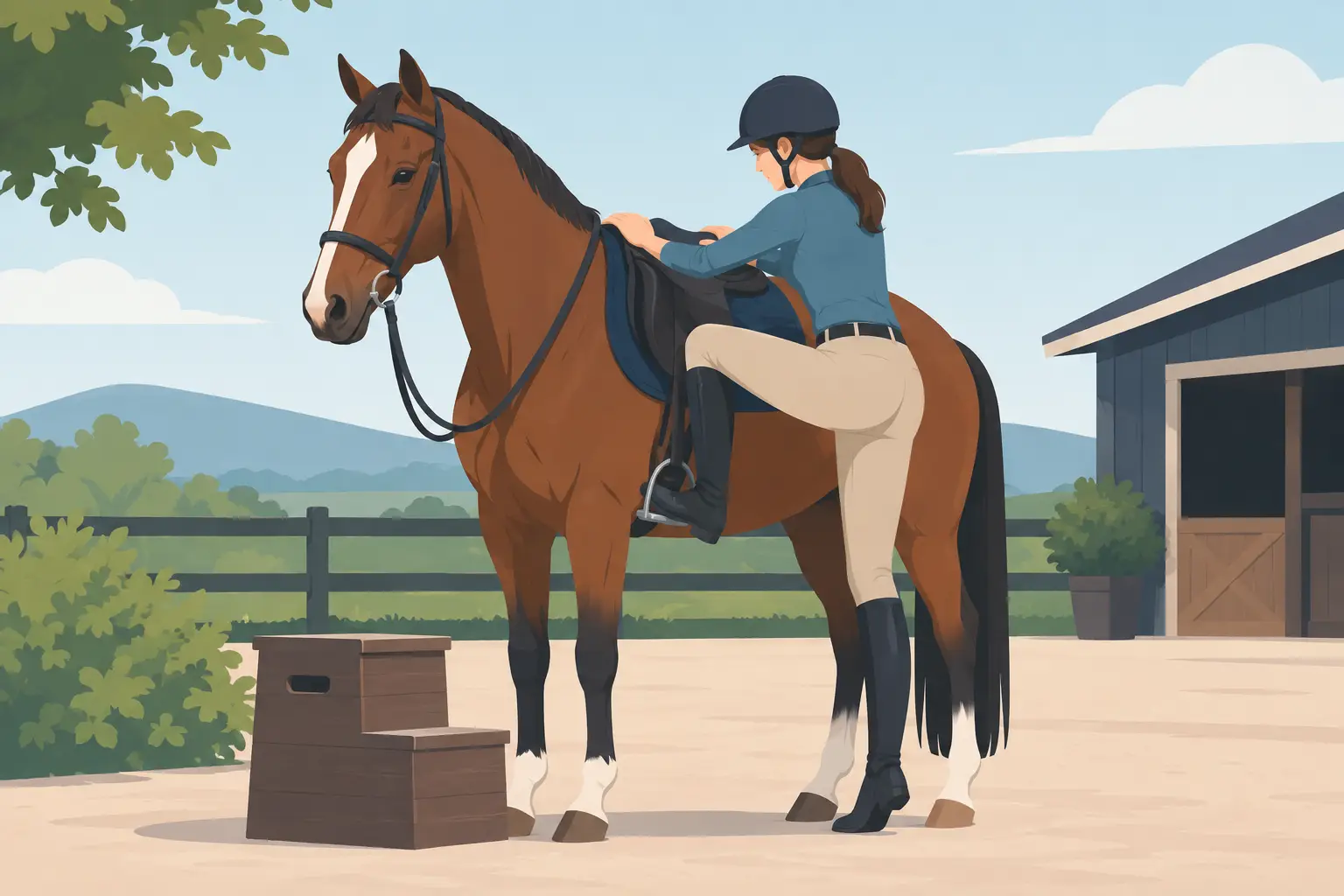
A mounting block is not a shortcut. It is a smart tool that reduces strain on both rider and horse. Stepping up from a block lets you reach the stirrup with less pulling and less twisting of the saddle.
Your wrangler will place the horse beside the block and make sure it is standing squarely. Step onto the block steadily, facing the horse’s side. Avoid hopping or making sudden movements. If you feel unsteady at any point, pause and ask for help. There is no prize for mounting quickly, and experienced riders use mounting blocks all the time.
How to Mount a Horse Safely, Step by Step
Once the horse is standing quietly and your wrangler gives the go-ahead, take the process one piece at a time. Keep your eyes up, move deliberately, and avoid gripping the horse with your hands or legs before you are fully seated.
Place Your Hands and Foot Correctly
With your left hand, hold the reins as your guide has shown you, keeping enough contact that the horse cannot easily step away but never yanking on its mouth. You may also hold a small amount of mane near the saddle for stability. Mane is a safe handhold because it does not pull on the horse’s skin.
Place your left foot in the left stirrup, using the ball of your foot rather than pushing it all the way through. Keep your toe pointed generally forward. Do not use the saddle horn, if present, as your main handle for hauling yourself upward. Instead, use the stirrup, your leg, and the support of the mounting block to rise smoothly.
Rise Smoothly and Clear the Saddle
Press down through your left foot, stand up beside the saddle, and lean slightly forward. Swing your right leg gently over the horse’s back, taking care not to bump the horse’s hindquarters with your boot. A smooth, controlled motion is kinder to the horse and helps you stay balanced.
Lower yourself into the saddle softly rather than dropping down. Once seated, place your right foot in the stirrup and find an even, comfortable position. Your wrangler can help adjust stirrup length if your legs feel too stretched or too bent. Mention discomfort right away instead of hoping it will improve after the ride begins.
What to Do Once You Are in the Saddle
Being seated is not the end of the mounting process. Take a moment to organize yourself before the group moves. Sit tall without becoming stiff, let your shoulders relax, and keep both hands where your wrangler instructed.
Your feet should rest securely in the stirrups, with your heels naturally lower than your toes. Keep your legs long and quiet against the horse’s sides. Avoid squeezing repeatedly, kicking, or shifting around to test your balance. Those movements can send mixed messages to a horse that is waiting patiently for direction.
Let Your Wrangler Make Final Adjustments
A knowledgeable guide may check your stirrups, reins, posture, or saddle position after you mount. This is especially common for guests on their first horseback ride, and it is one of the best ways to begin with confidence.
Ask questions while the group is still stopped. You may want to know where to rest your hands, how much rein contact to maintain, or what to do if your horse stops for a moment. Clear answers on the ground make the experience more relaxed once you are out on the trail.
Common Mistakes to Avoid
Most mounting mistakes come from haste, not from lack of ability. Trying to climb aboard while the horse is walking, pulling hard on the reins, or swinging a leg over too quickly can make both horse and rider uncomfortable. Wait for the horse to be still, and let your guide reset the position if needed.
Do not grab the saddle with both hands and pull yourself up with your arms alone. That can twist the saddle and make the horse feel off balance. Do not mount from uneven ground if a block or level area is available. And never assume a quiet horse will remain perfectly still without guidance. Horses are living, responsive partners, not playground equipment.
It also helps to avoid comparing yourself to other riders. One person may step up easily, while another benefits from a taller block or a wrangler’s steadying hand. Both are normal. Safe riding begins with choosing the support that fits your body and experience level.
How Guides Help First-Time Riders
At a professional riding operation, the team does much more than point guests toward a saddle. Wranglers match riders with suitable horses, inspect equipment, explain mounting and dismounting, and watch for small details that help everyone feel at ease.
That support matters on desert rides near Phoenix, where guests may arrive with very different levels of riding experience. At KOLI Equestrian Center, the goal is to help riders settle into the experience with knowledgeable guidance, well-cared-for horses, and time to enjoy the land around them. A good guide does not make a beginner feel hurried or embarrassed for asking for help.
Practice the Same Care When Dismounting
When the ride is over, wait until your wrangler tells you it is time to dismount. Take both feet out of the stirrups before bringing your right leg gently over the horse’s back. Slide down facing the horse’s side, land with bent knees, and step away from the horse’s legs.
If you need assistance, ask. Dismounting can feel awkward when legs are tired, especially after a first ride. Your guide can position a block or offer direction so you finish the experience as safely as you started it.
The best mount is a quiet one: a horse standing comfortably, a rider moving with purpose, and a guide nearby to help. Take that extra breath, listen to the wrangler, and give yourself permission to learn at a comfortable pace. The view from the saddle is even better when you arrive there with confidence.