Horseback Riding Versus Wagon Tour or Both?
A desert outing can look very different from the reservation trail than it does in a booking photo. The choice between horseback riding versus wagon tour is not simply about whether you sit in a saddle or on a wagon bench. It is about how you want to experience the land, who is coming with you, and what kind of memory you want to take home.
For some guests, the right afternoon means the quiet confidence of riding their own well-cared-for horse through open desert scenery. For others, it means sharing the view, conversation, and stories with family or friends from the comfort of a wagon. Both can be meaningful, scenic, and beginner-friendly. The best choice depends on your group and your expectations.
Horseback Riding Versus Wagon Tour: The Core Difference
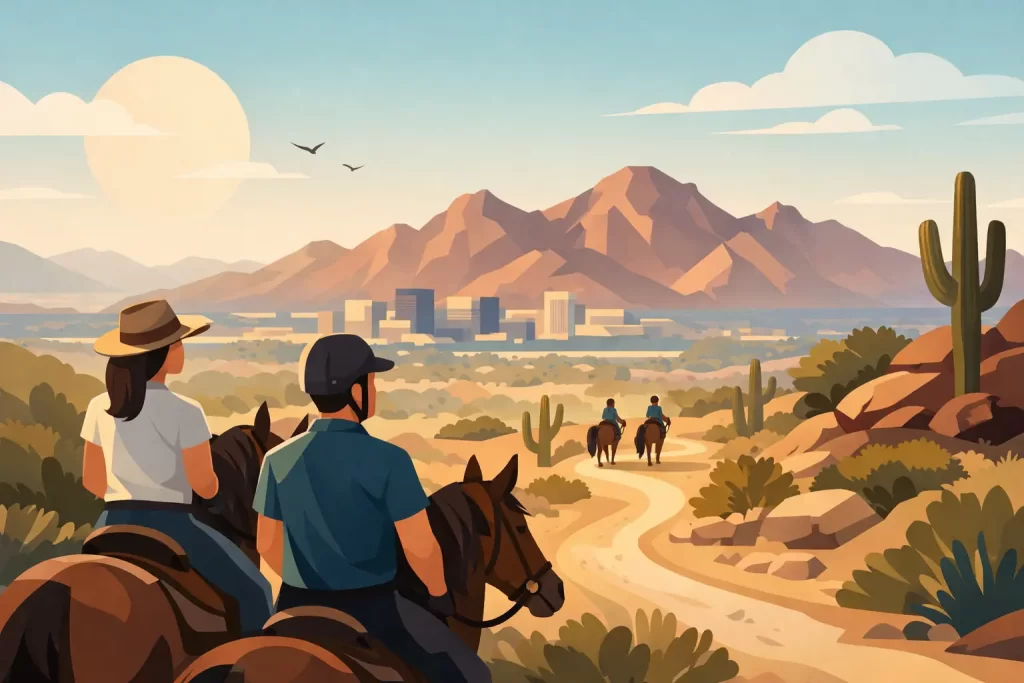
A guided horseback ride is personal. You are paired with a horse, receive direction from experienced wranglers, and experience the trail from the saddle. The horse becomes part of the adventure. You notice the rhythm of its walk, the sounds of the desert, and the space around you in a way that feels active without needing previous riding experience.
A wagon tour is communal. Everyone travels together, which makes it easier to talk, laugh, point out scenery, and share the experience as it unfolds. It can be especially appealing for multigenerational families, guests who would rather not mount a horse, or groups that want a relaxed Western-style outing without the physical demands of riding.
Neither option is automatically better. A couple celebrating an anniversary may prefer the individual connection of a horseback ride. A family gathering with young children, grandparents, and several comfort levels may find that a wagon creates the more enjoyable shared experience.
Choose Horseback Riding for a More Personal Adventure
Horseback riding is often the first choice for visitors who want to feel part of the landscape rather than simply view it. Being in the saddle gives you a sense of presence that is hard to duplicate. You can look across the desert from a different vantage point, feel the pace of the trail, and enjoy the quiet moments between conversations.
First-time riders are often surprised by how approachable a guided ride can be when it is run well. Before the ride begins, wranglers explain how to sit comfortably, hold the reins, communicate simply, and follow the trail safely. The goal is not to test anyone’s riding ability. It is to help guests feel prepared, supported, and free to enjoy the experience.
Horseback riding can also be an excellent fit for smaller groups, couples, friends, and travelers looking for a memorable Arizona activity beyond restaurants and resort pools. It creates natural photo moments, but its real value is in the feeling of being outdoors on a horse with knowledgeable guides nearby.
That said, horseback riding does require a little more participation. Guests need to be comfortable getting on and off a horse, following safety instructions, and spending the ride in a saddle. Anyone with mobility concerns, a strong fear of horses, or a preference for a more stationary seat may be happier on a wagon tour.
What Makes a Guided Ride Feel Different
Not every trail ride should feel like a rigid line of guests staring at the back of the next horse. A thoughtful guided experience leaves room for appropriate spacing, natural conversation, and time to appreciate the scenery. The wranglers are there to manage the horses and support guests, but they are also hosts who help bring the place to life.
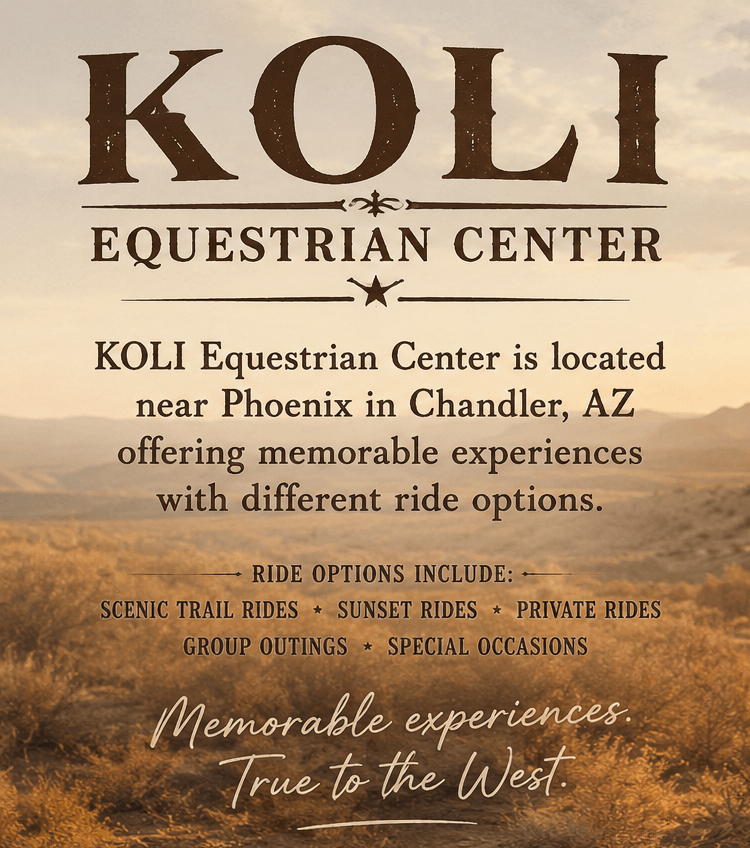
At KOLI Equestrian Center, the experience is shaped by the land and stories of the Gila River Indian reservation. A ride can offer more than desert views. It can create a respectful connection to the regional history, Native American heritage, and the people who know this landscape best.
Choose a Wagon Tour for Easy Group Connection
A wagon tour offers its own kind of adventure: less individual effort, more shared discovery. Rather than splitting your attention between your horse and the trail, you can settle in, take in the view, and enjoy the people around you. It is a welcoming option for guests who want the atmosphere of a Western outdoor experience without riding.
This format works particularly well when your group includes a wide range of ages or physical comfort levels. A wagon lets grandparents, parents, children, and friends participate together instead of dividing the group into riders and non-riders. It can also be a smart choice for birthday parties, company outings, reunion groups, and visitors who want a gentle introduction to the desert.
Because everyone is seated together, wagon tours make storytelling feel especially natural. A guide can point out features of the landscape, explain the area’s cultural significance, and answer questions that turn a scenic outing into something richer. Guests can react together, ask follow-up questions, and share the same moments in real time.
Comfort does not mean the experience is less memorable. A wagon ride can be full of fresh air, expansive views, laughter, and the kind of unhurried conversation that is rare on a packed vacation schedule. If your group measures a great activity by how many people can genuinely enjoy it together, a wagon may be the stronger choice.
Consider Your Group Before You Book
The most useful question is not, “Which activity sounds more exciting?” Ask, “What will make everyone in our group feel included and comfortable?” A horseback ride may be the clear winner for a confident, adventure-minded pair. A wagon tour may be the better answer when one person is nervous around horses, another has never ridden, and a third would rather sit beside a child than ride separately.
Age is only one part of the decision. Personality matters just as much. Some children are thrilled by the idea of having their own horse, while others feel safer staying close to a parent on a wagon. Some adults want a new challenge; others want a low-pressure way to experience Arizona’s desert beauty.
Be honest about your group’s energy, physical needs, and goals. The right experience should not leave someone feeling pressured to participate in a way that makes them uncomfortable. A professional operator will help you understand age guidelines, safety considerations, and what each activity involves before you arrive.
Weather, Timing, and Occasion Matter Too
In the Phoenix area, the season and time of day can shape the experience. Cooler mornings and late afternoons often make desert outings especially pleasant, while warmer conditions can make comfort a bigger priority. If your group is visiting Arizona for a special occasion, think about the pace you want for the day around the activity.
A horseback ride can be a standout centerpiece for a couples’ outing or a small group adventure. A wagon tour can fit beautifully into a larger celebration, themed event, or family itinerary because it keeps the group together and encourages conversation. Private options may also give you more flexibility for the occasion, whether you are planning a birthday, team gathering, or a visit with out-of-town family.
You Do Not Always Have to Choose One
For some groups, the best answer to horseback riding versus wagon tour is both, especially when planning a private event or a larger gathering. Offering different ways to experience the setting can make an event more inclusive. Guests who want the saddle can enjoy a guided ride, while those who prefer a relaxed seat can still be part of the same desert experience through a wagon-based activity.
This approach is especially useful for corporate groups and celebrations where guests arrive with different comfort levels. Nobody has to sit out the main attraction. Instead, everyone can choose the format that lets them enjoy the land, hospitality, and storytelling with confidence.
A great desert experience should feel welcoming from the moment you arrive, whether you are climbing into a saddle for the first time or settling onto a wagon bench beside someone you love. Choose the option that gives your group room to relax, listen, laugh, and carry home a story worth telling.