
Horseback Tour for First Timers: What to Expect
That little mix of excitement and nerves you feel before your first ride is completely normal. A horseback tour for first timers should feel welcoming, safe, and memorable – not intimidating. The right guided ride gives you more than a horse and a trail. It gives you calm instruction, a well-matched horse, and time to settle into the experience so you can enjoy the desert, the conversation, and the moment.
For many guests, the biggest surprise is how approachable horseback riding feels once they arrive. You do not need a riding background, special vocabulary, or a fearless personality to have a great time. What matters most is choosing a professionally guided experience where beginners are expected, horses are cared for properly, and wranglers know how to help people relax from the first few minutes.
Why a horseback tour for first timers feels easier than expected
People often imagine horseback riding as something that demands instant confidence. In reality, a good first ride is built around guidance and pace. Your wrangler explains the basics clearly, helps you mount, checks your position, and stays attentive throughout the ride. That structure makes a big difference.
The horse also does a lot more than first-time riders expect. On a guided trail ride, horses are experienced partners. They know the setting, they understand the routine, and they are selected with guest comfort in mind. That does not mean you can tune out completely, but it does mean you are not figuring everything out on your own.
Another reason first rides feel manageable is that the experience is not just about riding skill. It is about being outdoors, noticing the landscape, listening to stories from your guide, and sharing something different with the people you came with. When the pressure to “perform” disappears, most beginners settle in quickly.
What to expect before you get in the saddle
A quality tour usually starts with a check-in process that is simple and organized. You may be asked to arrive a little early, sign a waiver, and listen to a short safety briefing. This part matters. It sets expectations and gives you a chance to ask the questions you were almost embarrassed to ask, like how to sit comfortably or what to do if your horse stops to look around.
Next comes horse matching. This is one of the clearest signs that you are in good hands. Rather than treating every guest the same, a well-run operation pays attention to age, comfort level, group dynamics, and overall confidence. A first-time rider does not need the same kind of horse or the same kind of coaching as someone with prior experience.
You will also get basic riding instructions in plain language. Expect guidance on how to hold the reins, where to place your feet, how to sit balanced in the saddle, and how to follow your wrangler’s lead. It should feel calm and practical, not rushed or overly technical.
What to wear on your first horseback tour
Clothing can make your first ride much more comfortable. Long pants are usually the best choice because they help reduce rubbing against the saddle. Closed-toe shoes with a firm sole are also a smart call. You do not need to dress like a ranch hand, but you do want to dress for movement, sun, and time outdoors.
In Arizona, the weather matters. Lightweight layers work well because desert mornings and evenings can feel different from the middle of the day. Sunscreen, sunglasses, and a hat that fits securely can all help, although some guests prefer to skip the hat if they want one less thing to adjust.
The main thing to avoid is clothing that shifts, pinches, or distracts you. If you keep tugging at your outfit, it is harder to relax and enjoy the ride. Comfort beats style every time on a first outing.
The first few minutes on horseback
Most beginners feel the most uncertainty right after mounting. The horse suddenly feels tall, your body becomes more aware of every movement, and you may wonder if everyone else looks more natural than you do. Give yourself a few minutes. That early awkwardness is part of the process.
Once the ride begins, your body starts to find the rhythm. You learn quickly that staying relaxed helps more than trying to control every motion. Your wrangler may remind you to sit tall, keep your hands steady, and breathe. Those small adjustments go a long way.
This is also when trust starts to build. You begin to notice your horse responding, the group settling into pace, and the trail opening up around you. Instead of focusing only on what feels unfamiliar, you start paying attention to the scenery and the experience itself.
Common worries first-time riders have
The most common fear is falling. While no outdoor activity is without risk, a professionally guided ride is designed to reduce unnecessary stress and keep safety front and center. Clear instructions, suitable horses, and attentive wranglers all matter here. If a company seems casual about safety, that is not a good sign.
Another worry is feeling out of control. The truth is that horseback riding always involves working with a living animal, so there is a balance between guidance and unpredictability. But on a beginner-friendly tour, that balance should feel supportive, not overwhelming. The goal is not perfect control. The goal is communication, comfort, and good supervision.
Some guests also worry about holding up the group. A thoughtful operator expects a range of comfort levels and knows how to guide groups accordingly. If the experience is built well, first-time riders should not feel like a problem to be managed. They should feel like exactly who the ride was designed to welcome.
What makes one beginner ride better than another
Not every trail ride is equally suited to new riders. Some feel transactional, with minimal conversation and a one-size-fits-all routine. Others are more personal. That difference shows up in the details – how staff greet you, how clearly they explain things, how the horses are presented, and whether the ride feels rushed or genuinely guided.
For first timers, the best experience is usually one that combines safety with hospitality. You want wranglers who are confident without being sharp, encouraging without being overly scripted, and knowledgeable enough to share more than instructions. A ride becomes more meaningful when it includes a sense of place, not just a route.
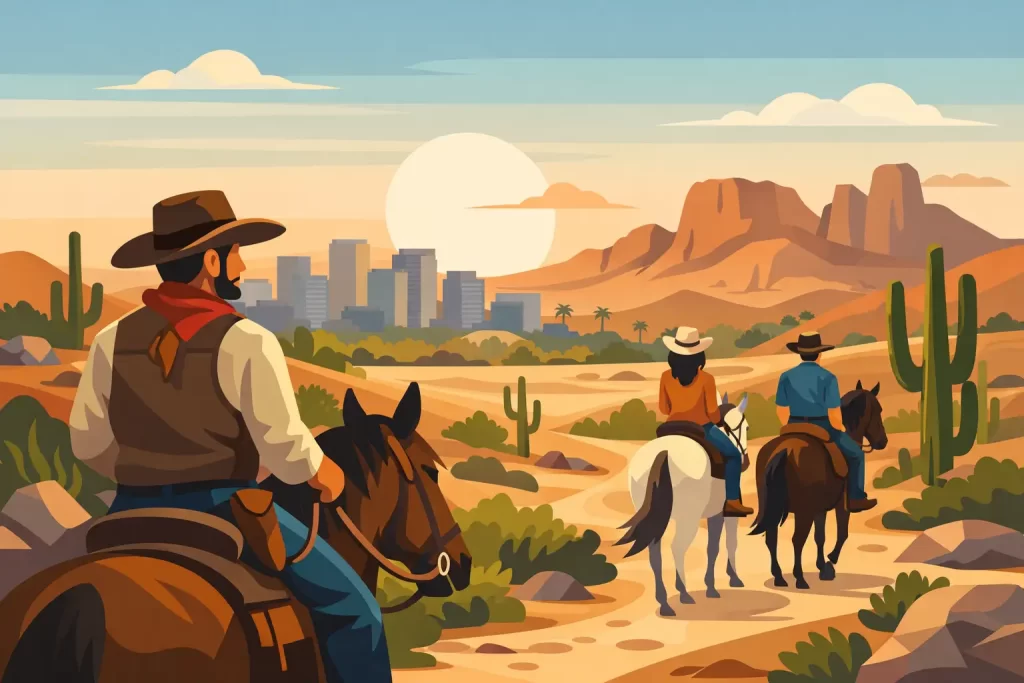
That is especially true in the desert. Riding through open Arizona landscape has a distinct quiet to it. The colors, the distance, and the wildlife all create a different pace. When guides can connect that setting to local history and Native American cultural context, the ride becomes more than a checklist activity. It feels rooted.
How to help yourself have a great first ride
The best thing you can bring is a willingness to listen and settle in. You do not need to arrive confident. You just need to be coachable. If your wrangler offers a correction, it is there to help you feel more secure and more comfortable.
It also helps to keep your expectations realistic. Your first ride may not feel effortless in the first five minutes, and that is fine. Some guests relax immediately. Others need a little more time. Neither experience is wrong. What matters is whether you finish feeling more connected, more comfortable, and glad you said yes.
If you are coming with family or friends, let everyone have their own pace. One person may be chatty and excited while another stays quiet until halfway through the ride. Shared experiences are still shared, even when people settle into them differently.
Is a horseback tour for first timers worth it?
If you are looking for something active but not frantic, scenic but still personal, horseback riding is hard to beat. It asks you to be present in a way many vacation activities do not. You cannot rush it, and that is part of the value.
For couples, it creates a memory with a little more character than a standard dinner reservation. For families, it gives kids and adults a chance to do something side by side that feels new. For visitors and locals alike, it offers a different way to experience the Sonoran landscape – one shaped by horses, hospitality, and stories carried by the land itself.
At places like KOLI Equestrian Center, that first ride can feel especially memorable because the experience goes beyond the saddle. Guests are not just guided through the desert. They are welcomed into it with care, local knowledge, and a genuine sense of connection.
If you have been thinking about booking your first ride, trust this: you do not need to be a rider to belong on the trail. You just need the right guide, the right horse, and the willingness to let the day unfold a little slower than usual.